Every conference on Confira carries a number from 0 to 100 called its ROCME score. It is our way of answering, at a glance, the question researchers and professionals ask most often: can I trust this event? This article explains what a ROCME score is, what goes into it, what the number means, and how to use it when you are deciding whether to attend, submit to, or pay for a conference.
What ROCME stands for
ROCME stands for Return On Conferences, Meetings & Exhibitions. The idea is simple: a conference is an investment of your money, your time, and your reputation, and you deserve a clear signal of what you are likely to get back. Rather than leaving you to piece together scattered clues, Confira gathers the meaningful signals about an event and distils them into one honest, comparable rating.
What goes into a ROCME score
A ROCME score is computed from the signals that actually indicate whether an event is legitimate and worthwhile. In plain terms, it rewards trust and transparency and penalises red flags:
- Verified organiser. Events whose organiser Confira has verified as legitimate score higher, this is the strongest positive signal.
- Attendee reviews. Genuine ratings from people who have attended move the score up or down, weighted by how many reviews there are.
- A complete, transparent listing. A real website, a detailed description, a named organiser, and a claimed page all signal a real event rather than a thin, scraped listing.
- Community reports. If the event has approved community reports warning of predatory or fake behaviour, its score is capped and clearly flagged.
Because these signals grow over time, a score is not fixed, it sharpens as an organiser gets verified, as attendees leave reviews, and as the community weighs in.
What the number means
The 0–100 score maps onto easy-to-read bands:
- 80–100, Excellent: strong trust signals, typically a verified organiser and good reviews.
- 65–79, Strong: a solid, credible event.
- 50–64, Fair: reasonable, but do your own checks before committing.
- 35–49, Limited signal: not enough information yet, treat with caution and verify.
- Below 35, Low / flagged: weak signals, or community reports of predatory behaviour. Be very careful.
A brand-new but genuine event may start with a modest, provisional score simply because there is little information yet, that is not an accusation, just a reflection of how much is known so far.
Why we show the full breakdown
Trust should be transparent, so a ROCME score is never a black box. On each event's page you can expand the score to see exactly which factors contributed and by how much. If an event scores low, you can see why; if it scores high, you can see what earned it. This is deliberately different from opaque "rankings", the goal is to help you make your own informed decision, not to ask you to take our word for it.
How to use a ROCME score
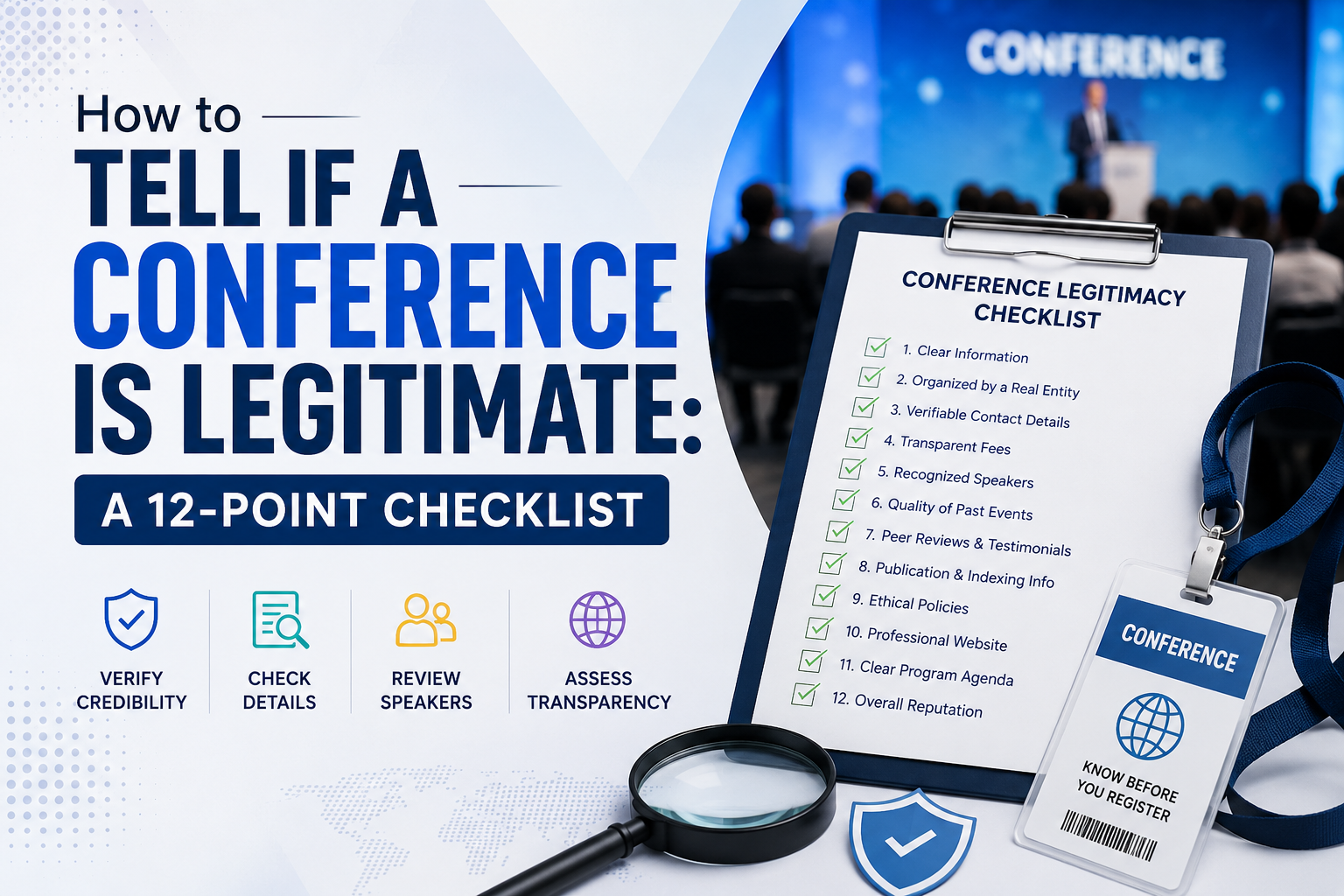
Think of ROCME as a fast first filter, not the final word. A high score is a good sign that an event is legitimate and worth your time; a low or flagged score is a prompt to slow down and investigate. Whatever the number, pair it with a quick check of your own: run the event through our conference checker, work through the 12-point legitimacy checklist, and read our complete guide to predatory conferences if anything feels off. Used together, these turn a nagging "is this real?" into a confident decision.
How organisers can raise their score
If you organise events, a strong ROCME score is worth earning because it builds attendee trust. The most effective steps are straightforward: get your organiser profile verified by Confira, keep your event listing complete and transparent (real website, clear description, named organiser), and encourage genuine attendees to leave honest reviews. Real signals, consistently, are what lift the score, there are no shortcuts, which is exactly what makes it meaningful.
Frequently asked questions
Is a high ROCME score a guarantee an event is legitimate? No single number is a guarantee. A high score strongly suggests trustworthiness, but you should still do a quick independent check before paying, especially for events you have not heard of.
Why does a real conference I know have a low score? Often because there is little information on the platform yet, few reviews, an unverified or unclaimed listing. The score reflects available signals, and it rises as the event gets verified and reviewed.
Can organisers pay to raise their ROCME score? No. ROCME is built from trust signals like verification, reviews, and transparency, not payment. That independence is what makes it useful.
Where do I see a ROCME score? On every event's page on Confira, and on event cards as you browse. Expand it to see the full breakdown of what shaped the number.
No comments yet. Be the first to share your thoughts.