Predatory conferences are one of the quietest, most persistent scams in academic and professional life. They look like real events, use the language of real scholarship, and charge real money, but they exist to collect fees, not to advance any field. This guide explains exactly how they work, how to recognise them, and how to protect yourself, your money, and your reputation.
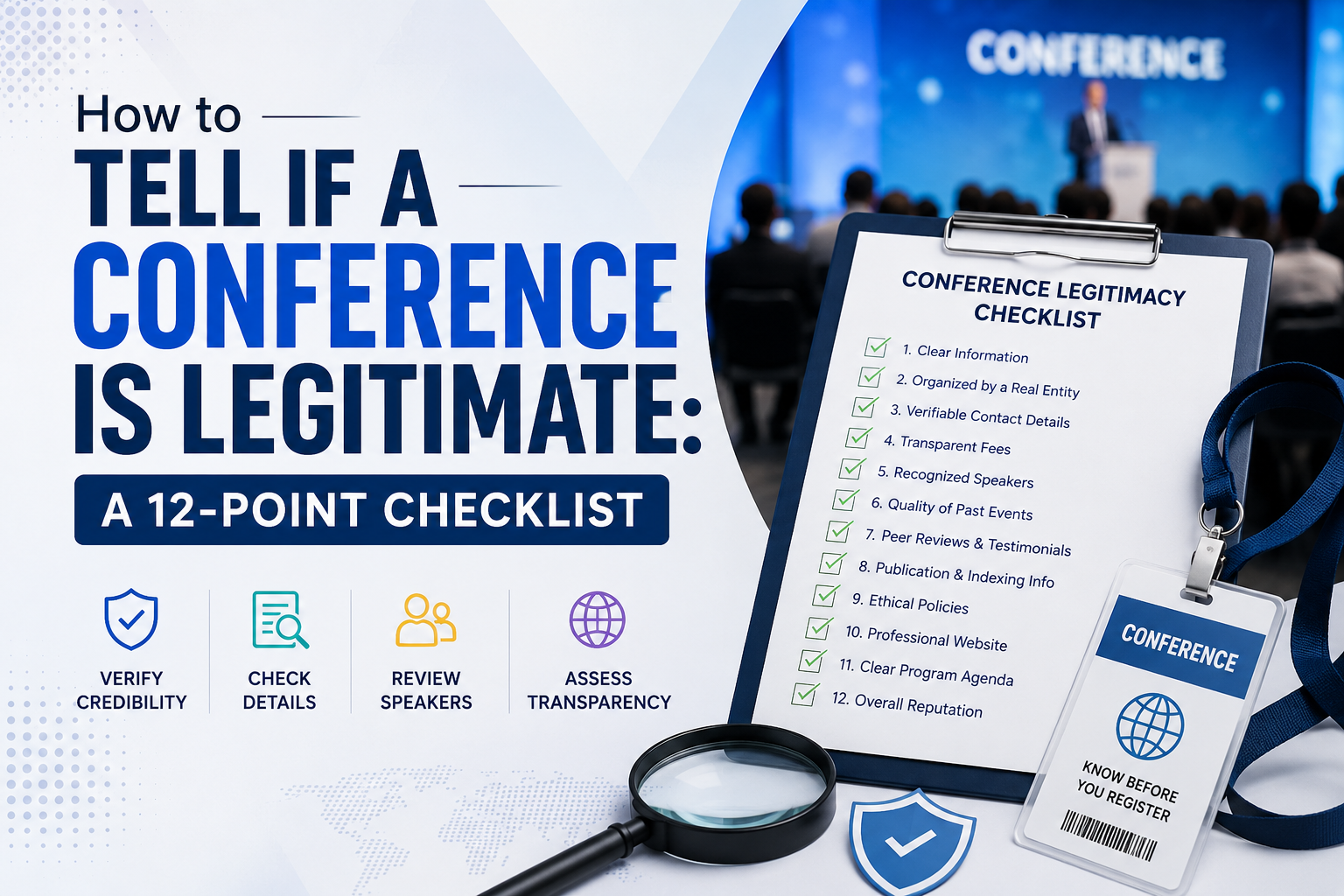
If you want a fast, practical version, our 12-point legitimacy checklist is the companion to this guide. And you can run any specific event through our free conference checker in under a minute.
What is a predatory conference?
A predatory conference is an event whose primary purpose is profit rather than scholarship or genuine professional exchange. The organisers send out large volumes of invitations, accept almost every submission, charge significant registration and "publication" fees, and deliver little of the peer review, curation, or networking value that a legitimate conference provides.
The term sits alongside "predatory journals", and the two are frequently run by the same operators. Both prey on a simple, honest pressure: researchers and professionals need to present, publish, and build a record, and predatory operators sell the appearance of that opportunity without the substance.
How the predatory conference business model works
Understanding the money makes the warning signs obvious. A predatory conference typically runs like this:
- Scrape and spam. Operators harvest author names and email addresses from published papers, then send flattering mass invitations ("Dear esteemed researcher, we would be honoured…").
- Accept everyone. Because the goal is fees, submissions are accepted within hours or days, with little or no real review.
- Charge to present. The real revenue is the registration or "speaker" fee, often payable before any review, and sometimes higher for presenters than attendees.
- Bundle a "publication". Many promise publication in an "indexed" journal, which turns out to be unverifiable or itself predatory.
- Run at volume. The same organiser may host dozens of "international conferences," sometimes in the same hotel on the same weekend, to maximise throughput.
Once you see the event as a fee-collection funnel, every unusual detail, the instant acceptance, the vague scope, the pay-to-present pricing, stops being a quirk and starts being the point.
The warning signs at a glance
No single sign is proof on its own, but several together are a strong signal. The most reliable red flags are:
- An unsolicited, flattering invitation for work slightly outside your field.
- A broad, catch-all scope ("Engineering, Medicine, Business and Social Sciences").
- Acceptance within 24–72 hours, or "guaranteed" acceptance.
- Committee members who can't be verified, or who never agreed to serve.
- Pay-to-present pricing, or fees demanded before review.
- A name that mimics a famous conference or society.
- No verifiable history, no past programme, photos, or proceedings.
- Vague contact details, only a web form or a generic email address.
- Unverifiable indexing claims ("published in Scopus/ISI-indexed journals").
For the full breakdown with what to check for each, see the 12-point legitimacy checklist.
Predatory vs. legitimate conferences
It helps to hold the two side by side:
- Review: legitimate events take weeks and can reject you; predatory ones accept almost instantly.
- Scope: legitimate events are focused on a field; predatory ones cast a wide net.
- People: legitimate committees are real, named, and verifiable; predatory ones list names that don't check out.
- History: legitimate events show past editions and proceedings; predatory ones have no traceable past.
- Money: legitimate fees cover venue and organisation; predatory pricing centres on charging presenters.
- Reputation: legitimate events are known within their community; predatory ones are unknown to your peers.
If an event lands on the wrong side of most of these, treat it with real caution.
The link to predatory journals
Predatory conferences and predatory journals are two sides of the same operation. A conference may exist mainly to funnel your paper into a low-quality journal for an additional fee, and a journal may exist mainly to give a conference something to sell. The same rule of thumb applies to both: verify independently. Before trusting any "indexed journal" promise, check the journal directly against recognised databases and your own librarian's guidance, never take the claim at face value because a conference made it.
A real cautionary tale
This is not a fringe problem. In a widely reported case, the U.S. Federal Trade Commission took legal action against the OMICS Group over deceptive practices tied to fake journals and conferences, and a federal court ultimately ordered a judgment reportedly exceeding $50 million. Cases like this are rare in the courts but common in researchers' inboxes, most predatory operators simply keep sending invitations because enough people pay. The lesson isn't that regulators will save you; it's that a few minutes of checking will.
How to protect yourself: a simple workflow
You don't need to be an expert. Before you pay a fee, book travel, or submit an abstract, run this quick routine:
- Search the organiser's name together with the word "predatory" and see what comes up.
- Verify two or three committee members, do their institutional pages mention this event?
- Look for last year's edition, programme, photos, proceedings. No history is a bad sign.
- Check the fee structure, are presenters charged more, or asked to pay before review?
- Ask a colleague or supervisor, have they heard of it? Is it on any society's calendar?
- Run it through a checker, our conference checker scores the event against these signs and shows any community reports in seconds.
For finding legitimate opportunities in the first place, browse vetted calls for papers and conferences already listed on Confira.
What to do if you've been targeted or scammed
If you receive a suspicious invitation, the safest response is simply not to engage, don't pay, and don't submit. If you've already paid and believe the event is fake or grossly misrepresented, you still have options: contact your bank or card provider about disputing the charge, keep all correspondence as evidence, and warn others by reporting the event to our community so your experience protects the next person. You are not alone, and it is not a reflection on your judgment, these operations are designed to look convincing.
How Confira helps you avoid predatory conferences
Confira exists to make this kind of checking effortless. Our conference checker walks you through the research-based warning signs and gives a clear risk verdict. Every event on the platform also carries a ROCME score, a computed authenticity and quality rating, so you can judge trustworthiness at a glance. Community members share and read reports of events to watch, and organisers we've verified carry a Verified badge. Together, that turns "is this conference legitimate?" from an anxious late-night search into a one-minute answer.
Frequently asked questions
Are all conferences that charge fees predatory? No. Legitimate conferences charge fees to cover venues, catering, and organisation. The warning sign is pay-to-present pricing, fees demanded before review, or costs that keep changing, not the existence of a fee.
Can a predatory conference still put me in a real journal? Rarely, and you can't rely on it. "Indexed journal" promises attached to predatory conferences are usually unverifiable or point to predatory journals. Always verify the journal independently.
Is a fast acceptance always bad? For peer-reviewed academic conferences, a 24–72 hour acceptance is a serious red flag, because genuine review takes weeks. Some professional or industry events don't peer-review talks, so judge acceptance speed alongside the other signs.
How do I check a specific conference quickly? Run it through our free conference checker. It scores the event against known warning signs and surfaces any community reports in seconds.
Where can I learn more about vetting events? The international "Think. Check. Attend." initiative (thinkcheckattend.org) is a helpful, independent resource, and our own 12-point checklist gives you a practical, printable routine.
No comments yet. Be the first to share your thoughts.