You open your inbox and there it is: an email praising your "outstanding contribution to the field" and warmly inviting you to speak at an international conference. It feels good, and that is exactly the point. Unsolicited, flattering invitations are the single most common opening move of predatory conferences. Here is how to tell, in a few minutes, whether the invitation in front of you is genuine or a trap.
Why you got the email
Before you feel singled out, know how these emails are usually generated: predatory operators scrape author names and addresses from published papers and conference lists, then send the same flattering template to thousands of people at once. The praise is not personal, it is a mass mailing designed to flatter you into paying a registration fee. That is not a reason to panic, but it is a reason to check carefully before replying.
The red flags hiding in the invitation
You can spot most predatory invitations from the email alone. Look for these signs:
- Vague, generic praise. It compliments your "valuable research" but never names a specific paper, finding, or topic of yours.
- A field mismatch. The conference is outside your actual area, or so broad it covers everything ("Engineering, Medicine, Business and Social Sciences").
- Urgency and flattery together. "Esteemed researcher, limited slots, respond within 48 hours." Pressure plus praise is a classic manipulation.
- A quick promise of publication. It dangles publication in an "indexed" or "Scopus-listed" journal in exchange for attending.
- A generic sender address. The email comes from a free webmail account or a domain that does not match the conference name.
- Fees front and centre. Registration or "speaker" fees appear early and prominently, sometimes payable before any review.
- Sloppy details. Odd grammar, mismatched dates, stock photos, and copy-pasted text that does not quite fit you.
One of these alone might be innocent. Several together is a strong warning.
A 5-minute verification routine
If the invitation clears the quick read but you are still unsure, spend five minutes on this:
- Search the conference name plus the word "predatory" or "scam" and see what others say.
- Check the sender's domain, does the email address actually match the conference's official website?
- Verify two committee members, search their names; do their university pages mention this event?
- Look for last year's edition, a real recurring conference has a programme, photos, and proceedings you can find.
- Run it through a checker, paste the details into our free conference checker for an instant risk verdict and any community reports.
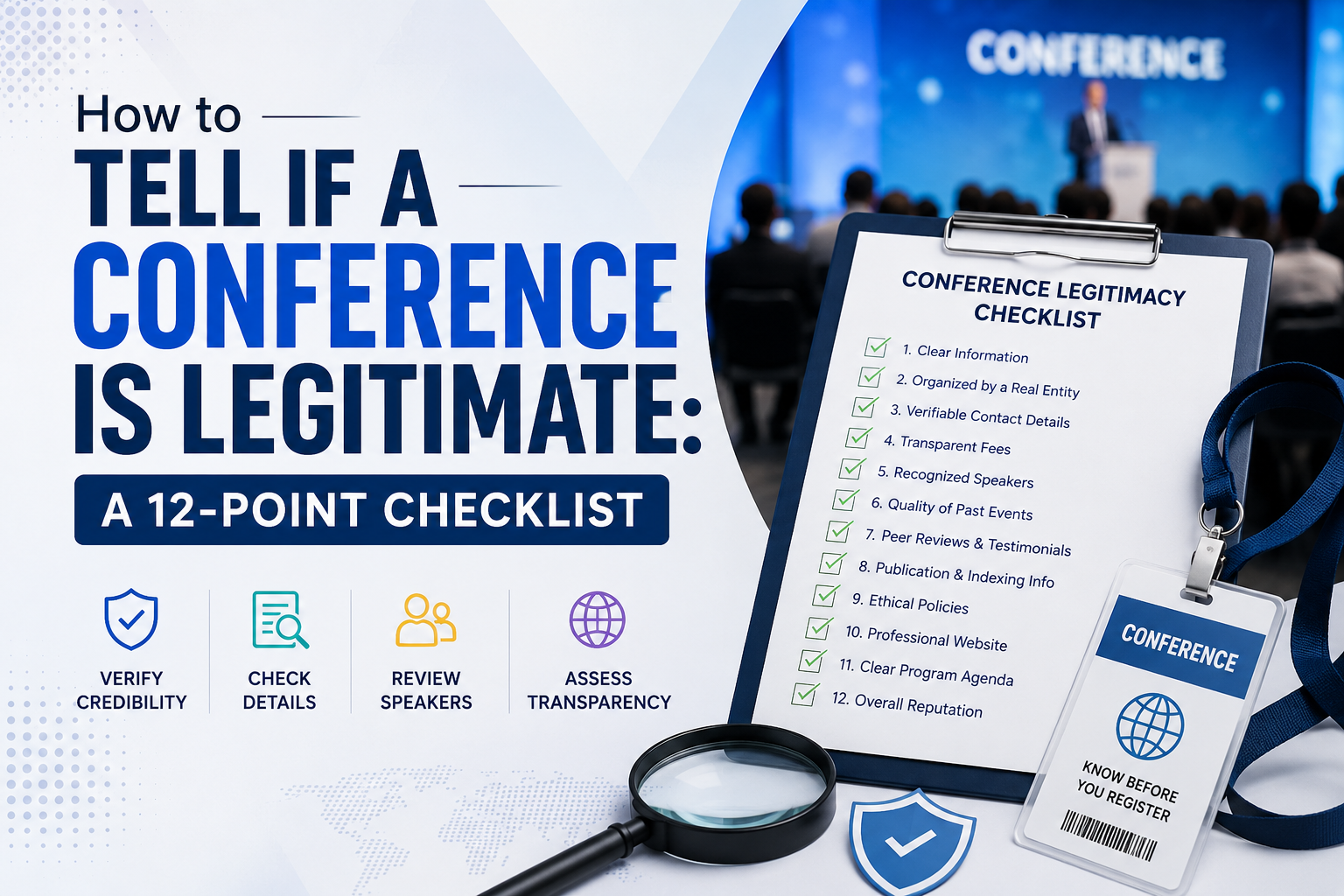
For the complete version of this process, keep our 12-point legitimacy checklist handy.
What a genuine invitation looks like
Real invitations tend to feel different. They reference your specific work or a shared connection, come from a named person at a verifiable institution or society, use an email domain that matches the event, and are transparent about who is organising it and why you in particular. Genuine conferences also give you room to decide, they are not pushing you to pay within 48 hours. When an invitation is specific, verifiable, and unhurried, it is far more likely to be the real thing.
What to do with a suspicious invite
If the email looks predatory, the safest response is the simplest: do not reply, do not pay, and do not submit anything. Engaging often just leads to more emails and more pressure. If you would like to help others, report the event through our conference checker and share a heads-up in the community forum so your colleagues can steer clear. And if you have already paid before realising, our guide on what to do if you paid for a fake conference walks you through recovering your money and protecting your record.
To understand the wider pattern behind these emails, read our full guide to predatory conferences. And when you want to find events you can actually trust, browse vetted calls for papers and conferences on Confira.
Frequently asked questions
Is every unsolicited invitation a scam? No, genuine organisers do sometimes reach out. The difference is specificity and verifiability: a real invite references your actual work and comes from a checkable source, while a predatory one is generic, urgent, and fee-focused.
They mentioned my real paper, does that make it safe? Not necessarily. Scrapers can pull your paper title too. Treat a named paper as one small positive signal, not proof; still verify the organisers and the event's history.
Should I reply and ask questions? It is usually better not to engage with a suspicious sender. If you must, never pay or share card details, and verify everything independently through the conference's official channels rather than the email.
How can I check fast next time? Keep our conference checker bookmarked. Paste in any event and you will get a risk verdict and community reports in seconds.
No comments yet. Be the first to share your thoughts.