For years, one of the quiet tells of a predatory conference was a cheap, clumsy website: broken layouts, stock photos, awkward English. That tell is disappearing. With modern AI tools, anyone can generate a polished, professional-looking conference website in an afternoon, complete with a schedule, a venue, and a lineup of impressive names. The site looks real because it was built to look real. The event behind it may be anything but.
This shifts the burden onto you, the attendee or speaker. You can no longer judge a conference by whether its website looks nice. Here is how to look past the surface in 2026.
Why a good-looking site proves nothing now
AI can produce clean design, fluent copy, believable session titles, and plausible speaker bios on demand. It can fill a "past events" page with events that never happened. None of this requires a real conference, a real committee, or real money changing hands honestly. Design quality used to correlate with legitimacy. It no longer does.
So stop asking "does this look professional?" and start asking "can I verify this independently?"
The checks that still work
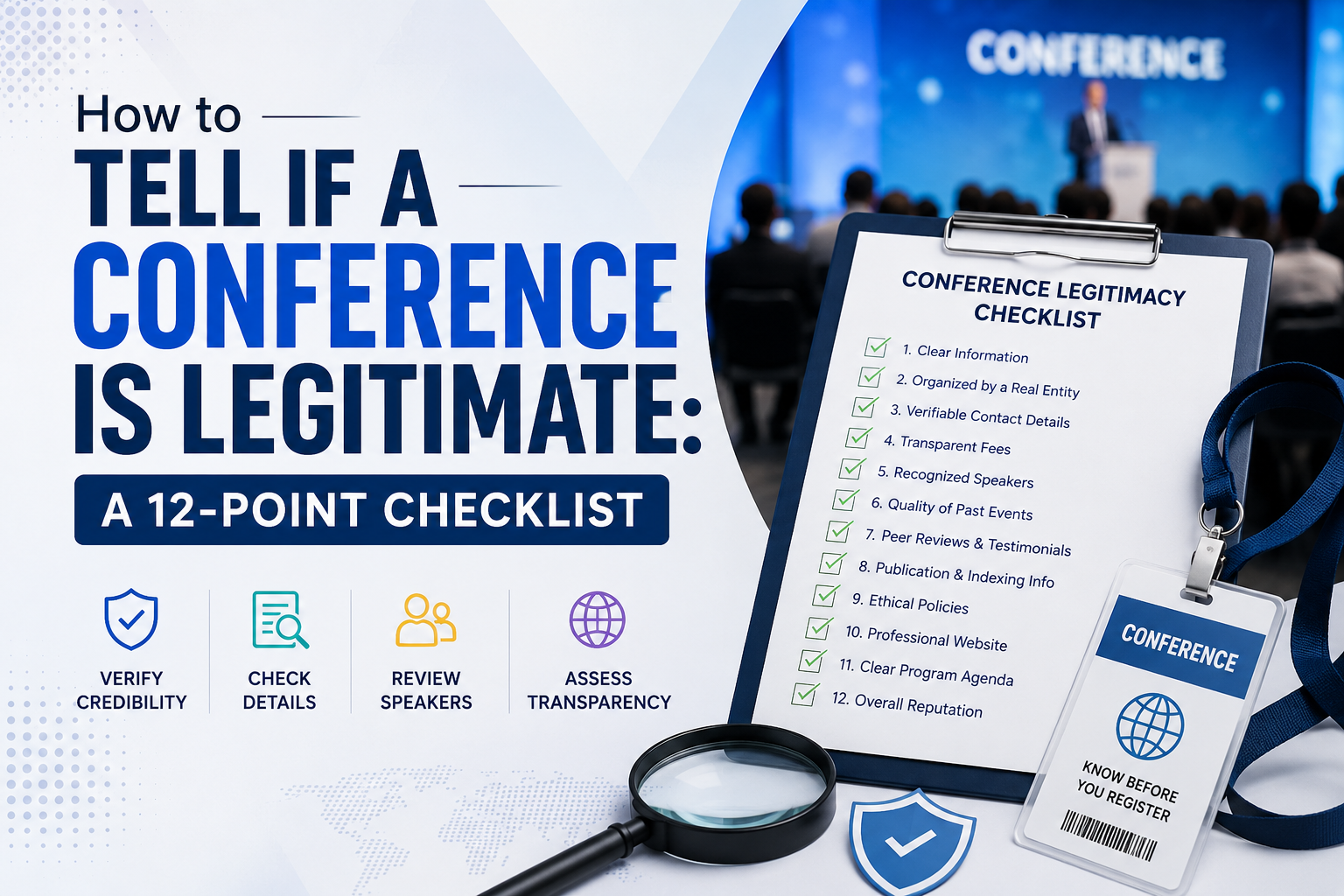
AI can fabricate a website, but it cannot easily fabricate a genuine, verifiable trail in the real world. Focus your attention there.
1. Verify the people, not the page. Pick three named committee members or speakers and confirm them independently. Do they exist at the institution listed? Does their own page, or a quick search, mention this event? A listed speaker who has never heard of the conference is the strongest red flag there is.
2. Check for a real history. A legitimate recurring conference leaves traces: past programmes, photos, proceedings, DOIs, mentions by attendees. A fabricated one has a suspiciously thin or unverifiable past, even if the page claims a long history.
3. Look at the fee structure and the ask. Be wary of instant acceptance, aggressive deadlines, pressure to pay quickly, and pricing that reads like a product ("early bird presenter package"). Genuine peer review takes weeks, not hours.
4. Scrutinise the contact and the domain. A generic web form and a free email address, with no named person and no institutional domain, is a warning sign. So is a brand-new domain for an event claiming years of history.
5. Watch for the mass-production pattern. Search the organising company. If the same operator runs dozens of differently branded "international conferences" across unrelated fields, often at the same few hotels, you are likely looking at a conference mill.
Let the checks compound
No single sign is proof on its own. The power is in the pattern. One unverifiable speaker might be an oversight. An unverifiable speaker plus no real history plus instant acceptance plus a generic contact is a conclusion.
To make this faster, we built a free conference checker that walks through these signals with you, and we track community reports so you can see whether others have already flagged an event. Every listing on Confira also carries a transparent trust score built from exactly these signals.
The takeaway
AI has made it trivial to fake the look of a legitimate conference. It has not made it easy to fake a real, verifiable footprint. Judge conferences on what can be independently confirmed, verify a few of the people by name, and treat a beautiful website as neutral rather than reassuring. In 2026, a polished page is the starting point of your due diligence, not the end of it.
*If you are researching a conference and are unsure, you can check it for warning signs and read community reports on Confira for free.*
No comments yet. Be the first to share your thoughts.